How to Get Fit for the Winter Hills

Winter days in the mountains ask more of you than summer walking ever will. Shorter daylight, heavier packs, colder temperatures, and harder underfoot conditions all add up. Being fit won’t remove the risks of winter, but it will give you more margin, more energy to make good decisions when it matters.

Fitness for the winter hills doesn’t mean training like an athlete. It means preparing your body for long days, sustained effort, and moving efficiently when conditions are demanding.
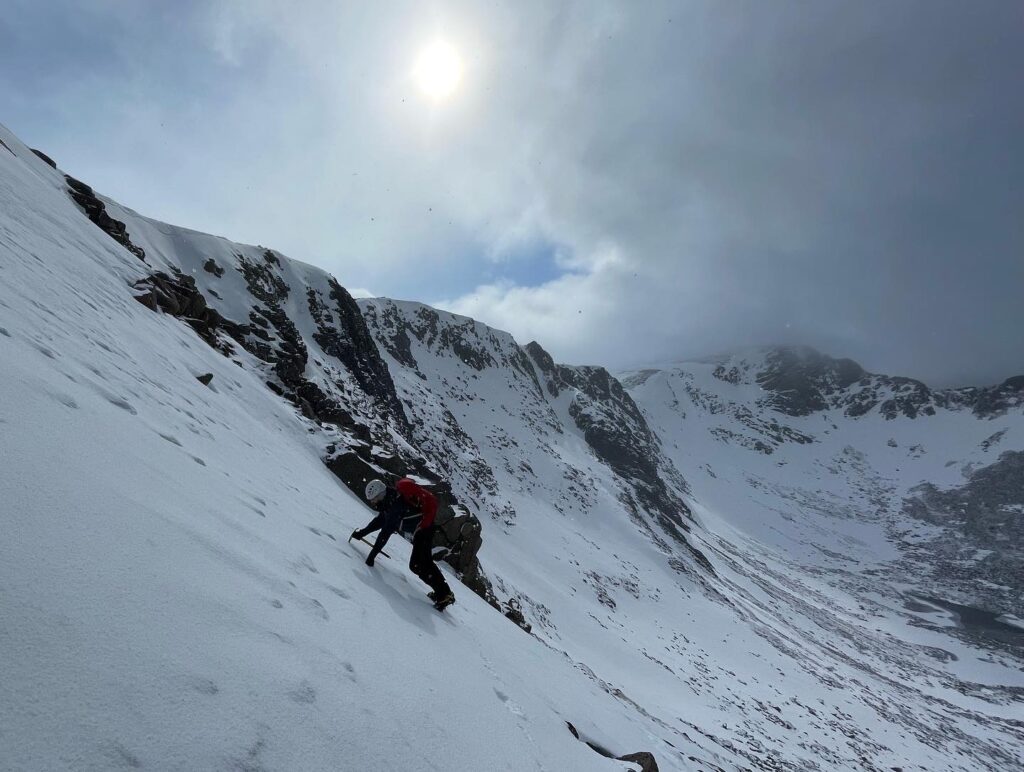
Building a Solid Fitness Base

Good cardiovascular fitness makes everything easier. Moving uphill with a pack, kicking steps, or breaking trail through snow all place extra demands on your heart and lungs.

Running, cycling, swimming, or regular team sports can all help build this base. The key is consistency. Doing something a few times a week, week after week, will always beat sporadic bursts of hard training followed by nothing.

You don’t need to be fast, you need to be steady.

Train for the Days You Want to Do

General fitness is a good start, but winter mountaineering rewards specificity.

All winter days in the Scottish hills are usually long days. So, get used to long days on your feet with a rucksack. Back-to-back hill days are particularly useful. They teach you how your body copes when you’re already tired — something that often matters more than peak fitness.

If you’re interested in steeper ground, ridges, or technical climbing, then time spent moving efficiently on varied terrain is invaluable. Linking scrambling routes, while carrying weight over rough ground all help prepare you for winter conditions. At home train your calves at the gym or simply standing on your tip toes while brushing your teeth all target specific leg muscles. And don’t forget the climbing wall for upper body strength.

Get Used to Early Starts

Winter days start early — often in the dark. Practising early starts removes the shock when it counts. Starting a hill day in the early hours helps you learn how your body responds before sunrise, how your energy levels feel, and how you cope mentally when the day feels long before it’s properly begun. Also try running in the cold dark weather before or after work. This trains the mind as much as the body.

It’s a small thing, but it pays off.

Mini Goals

One of the biggest reasons people abandon training plans is that they aim too high too quickly. Work, family, weather, and motivation all get in the way.

It’s far better to train little and often than to burn yourself out trying to do too much. Gradual progress is more sustainable and far more effective over time.

The Mental Side Matters

Physical fitness is only part of the picture. Long winter days can be mentally demanding, especially when conditions are poor or plans need to change.

Confidence comes from repeated and prolonged exposure, not from forcing yourself through fear. Longer days on your feet, will prepare you better than short bursts of energy.

Plan for Reality

Winter mountaineering should feel challenging. If it didn’t, it probably wouldn’t be worth doing.

Be honest about the hazards, plan escape options, and accept that some days will feel tough. Being fit, gives you head space to help you cope with those moments, but good judgement keeps you safe.

Takeaway

Fitness for the winter hills is about durability, not heroics. Build a strong base, train for the days you want to do, and give yourself enough resilience — physically and mentally — to move well when conditions are demanding.

All the Gear, No Idea.

Why Knowledge is as Important as Kit in Winter Mountaineering

We all love good kit, there’s a quiet thrill in trying something new and feeling ready for anything. But gear only takes you so far. Winter kit is essential, no question. You wouldn’t attempt a Scottish winter mountain in running shoes and shorts. Boots, crampons, ice axe, layers, helmet, they all matter. But having the right kit alone doesn’t make you safe. You need the knowledge to use it. Without it, all that gear is just expensive weight in your pack.

Using Your Kit Properly

Take crampons and an ice axe. Everyone knows they’re important, but do you really know how to use them in winter conditions? Can you kick a step efficiently into hard neve? Can you arrest a fall confidently with your axe? Do you know when to move differently on firm snow versus soft powder?

The difference between walking safely and slipping dangerously  isn’t just the kit,  it’s also your ability to apply it correctly. That skill comes from experience, practice, and guidance. Knowing the mountain, reading the snow, recognising cornices and avalanche risk.

Real Knowledge Comes from Experience

Old mountaineers like Tom Patey understood this perfectly. They didn’t have the lightweight, high-tech gear we carry today. They relied on knowledge, observation, skill and most importantly the application of these factors. They read the mountain like a book, and they knew how to use what they had to survive and enjoy it.

The same principle applies now. Today’s advanced gear makes life easier, but only if you know how to use it. Even the best boots, jacket, and axe won’t help you make good decisions if you’re unsure about snowpack, slope angles, or route-finding in poor visibility.

Dr Tom Patey below the crags of Beinn Dearg, Ross-shire, in 1969. Picture: John Cleare/Mountain Camera Picture Library

Seeing the Mountain Clearly

Winter transforms the landscape. A broad summer ridge can become a knife-edge in snow. Visibility can drop in seconds.

Knowing how to interpret what you see is crucial. That means:

  • Planning your day.
  • Identifying hazards before you step onto them.
  • Moving efficiently with crampons on varied snow.
  • Using your ice axe correctly.
  • Navigating safely when paths vanish under snow.

This is knowledge that can’t come from kit alone. It comes from practice, guidance, and spending time in winter conditions.

Scotland: The Perfect Classroom

The Highlands are the ideal place to learn. From January to April, snow and ice are reliable, and the terrain is varied. Ben Nevis, the Cairngorms, and remote plateaus give you real winter conditions.

Every hill becomes a lesson. You learn where to step, how to balance, how to move efficiently — all under realistic conditions. That’s why even experienced walkers benefit from structured winter skills training.

Takeaway

Kit keeps you alive, but knowledge and application of that knowledge, lets you use it confidently and effectively. The person who understands their ice axe, reads the snow, and chooses their route carefully will always outperform the person who only owns the newest gear.

Winter mountaineering is about combining both: gear and the how to use it. That’s what turns a day on the mountain from risky to rewarding.

Peak Outdoor’s 2-day Winter Skills & Mountaineering Course in Scotland gives you both. You get hands-on practice in real conditions, guidance from experienced instructors, and the confidence to move safely and efficiently in winter.

Because in the mountains, it’s not about how much you carry. It’s about what you know and do with it.

If you’re heading into the winter hills this season, get the skills to do it safely.
Book your Winter Skills Course with Peak Outdoor and be ready for real conditions.

Course dates for Winter 2026:

  • 24–27 Jan – limited availability
  • 31 Jan–3 Feb
  • 7–10 Feb
  • 28 Feb–3 Mar
  • 7–10 Mar
  • 21–24 Mar
  • 28–31 Mar
  • 4–5 Apr – limited availability

To book, call 07970 835737 or visit our Contact Us page to check availability.