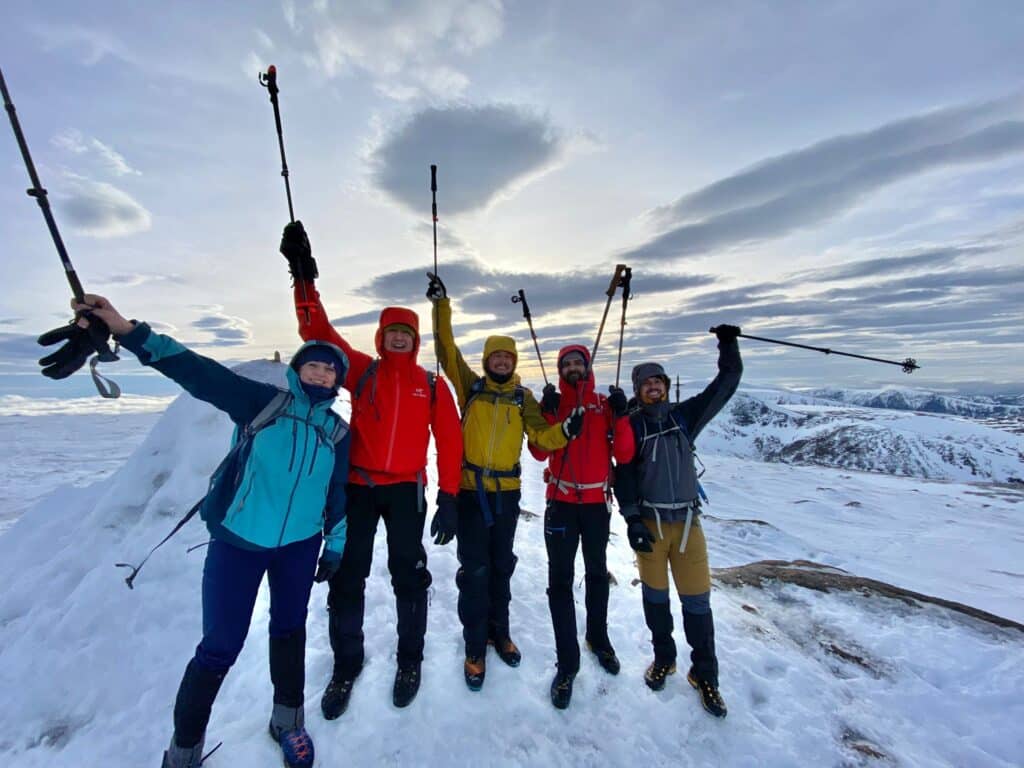
Discover why Scotland’s Highlands are the best place to master winter mountaineering.
Every winter, the Highlands turn into something special. The ridges sharpen, the corries fill with snow, and the light cuts across the landscape in a way that makes even the most familiar mountains look more adventurous. It’s raw, challenging, and at times unforgiving. That’s exactly why Scotland remains the best place to sharpen your winter skills.
Real Conditions, Real Learning
The Scottish winter doesn’t hand you easy days. One hour you’re on firm neve under blue skies. The next, the wind changes, the visibility drops, and you’re in a whiteout trying to pick your way across a plateau. That constant shift is what makes Scotland such an incredible classroom. You’re forced to adapt, to read the snow, test your footing, and adjust your pace, just as you would in bigger alpine ranges.
It’s a place that tests both your technique and your thinking.
Compact, Accessible, Serious Terrain
You don’t have to fly to the Alps to find technical, varied ground. Within a few hours of travel, you can go from your doorstep to full winter mountaineering conditions.
The Cairngorms offer broad plateaus, steep corries, and biting winds, ideal for navigation and avalanche awareness work.
Ben Nevis gives you altitude, sustained snow slopes, and mixed climbing routes that demand accuracy and judgement.
Places like Glencoe and Creag Meagaidh add variety, with big features, quick weather changes, and plenty of scope for skill development.
Everything you need to test yourself is right here. Close, reliable, and real.
The Value of Scottish Weather
There’s no better teacher than a Scottish winter storm. You learn how to navigate when your map is plastered with snow, how to dig a belay in biting wind, and how to manage your energy when out on big days. Scotland teaches respect. Respect for the weather, for the terrain, and for your own limits. It builds decision-making. You stop guessing and start judging.
That’s what real mountain experience looks like.
A Place That Builds Mountaineers
The Highlands have always shaped strong climbers and leaders. They reward preparation, precision, and patience. Every route, every day out in winter, adds another layer of experience.
You come away not just fitter or more skilled, but more aware. You understand what good snow feels like underfoot. You recognise when a slope has been wind-loaded. You know when to push on, and when to turn back.
Those are lessons that stick with you anywhere in the world.
Learn Where It Matters Most
That’s why we train here. Scotland offers everything the winter mountaineer needs: variety, challenge, and key decision making. It’s demanding, but the reward is confidence. Confidence built on real experience, not just good luck and clear skies.
There’s a saying in the mountaineering world and that’s “if you can climb in Scotland in winter you can climb anywhere”
Winter mountaineering involves travelling through mountainous terrain in snow and ice conditions, using specific equipment and movement techniques to stay safe and efficient. Unlike summer hillwalking, it introduces the additional challenges of avalanche risk, navigation in poor visibility, freezing temperatures, and more demanding terrain. For UK-based mountaineers, the Scottish Highlands provide a world-class setting to learn and hone these skills.
Why is Winter Mountaineering Difficult?
Mountaineering in winter conditions requires a broader skill set than in summer. Snow cover can obscure paths and increase physical effort. Ice presents slip hazards and demands the use of crampons and axes. Weather is more variable, and storm systems can bring rapid changes in visibility, wind strength, and temperature. Decision-making becomes more complex and has higher stakes, especially when avalanche conditions are present.
How Long Does It Take to Train for Mountaineering?
There’s no fixed timeline, but winter mountaineering skills are typically developed over multiple seasons. While a weekend course provides essential skills, developing confidence, judgment, and resilience comes from repeated exposure. Some climbers progress quickly by immersing themselves in intensive training blocks, while others spread learning over years, combining guided instruction with independent practice.
How Do I Get in Shape for Mountaineering?
Winter days are physically tougher. Soft snow, heavy packs, and cold conditions place greater strain on the body. Good base fitness—particularly cardiovascular endurance—is essential. Training for mountaineering should include hillwalking with weight, stair climbing, and strength work targeting the legs, core, and shoulders. Flexibility and balance also play a role in efficient movement on uneven terrain while wearing crampons.
When Is the Best Time of Year to Start?
In the UK, the winter mountaineering season typically runs from December through April, with the best conditions often appearing between January and March. For learning, stable weather and consolidated snow offer safer and more predictable terrain. Courses fill quickly during peak weeks, so booking early ensures access to favourable dates and qualified instructors.
How Do I Get Started in Winter Mountaineering?
Most experienced mountaineers start with formal instruction. A basic winter skills course teaches how to use crampons and an axe, navigate in snow, assess avalanche risk, and move safely in winter terrain. These courses are often the safest and fastest route to building a foundation. From there, joining club trips or heading out with more experienced partners helps solidify skills.
What Do You Need to Go Mountaineering?
Essential gear includes insulated, stiff-soled boots compatible with crampons, a mountaineering axe, waterproof clothing, insulating layers, a helmet, gloves, goggles, and navigational tools. Depending on conditions, avalanche gear may also be necessary. Kit must be carefully chosen to function in cold, wet, and windy environments where gear failure can have serious consequences.
How Long Is a Basic Mountaineering Course?
Introductory winter mountaineering or winter skills courses typically run from two to five days. Shorter courses focus on essential techniques such as axe and crampon use, while longer ones allow for greater depth, including snow shelter construction, emergency scenarios, and more advanced navigation. Multi-day courses allow participants to build skills progressively across varying conditions.
Is Mountaineering an Expensive Hobby?
Costs can add up. Gear—especially boots, crampons, and outerwear—requires a significant initial investment. Courses, travel, and accommodation also contribute. However, many providers offer gear rental, and club memberships can reduce overall costs. Once you’ve built a kit, ongoing expenses tend to be modest compared to other adventure sports.
Is There an Age Limit for Starting?
There isn’t a formal age limit. Many people begin winter mountaineering in their 40s, 50s, or beyond. The key is physical preparation and a willingness to learn. Older mountaineers often bring patience, better judgment, and a strong sense of risk awareness. Adjusting pace and objective helps ensure long-term enjoyment and safety.
Is Ski Mountaineering a Logical Progression?
Ski mountaineering introduces additional skills—namely, skiing proficiency, avalanche forecasting, and skinning techniques—but shares the core elements of winter movement and mountain judgment. It’s not a direct upgrade from walking-based mountaineering but can be a natural extension for those with ski experience seeking more efficient travel in snow-covered terrain.
Should I Do a Mountaineering Course?
For most, the answer is yes. Courses shorten the learning curve, reduce risk, and provide a structured environment to build good habits. Qualified instructors tailor content to conditions and individual ability, offering immediate feedback and real-world scenarios that can’t be replicated by reading or watching videos.
How Do You Become a Mountaineer, Really?
There’s no exam or final certification—just accumulated experience. You become a mountaineer by getting out in the hills, making decisions, learning from your mistakes, and gradually building a foundation of competence and confidence. Time in the mountains—especially in poor conditions—is irreplaceable. Each trip adds to your ability to move efficiently and safely through challenging terrain.
Where Can I Go Mountaineering?
In the UK, the Cairngorms and the Lochaber area (including Ben Nevis and Aonach Mor) are top destinations. These areas offer a mix of terrain suitable for learning and progressing. Further afield, the Alps, Norway, and Iceland offer more sustained winter conditions—but starting in Scotland provides both quality terrain and expert instruction.
In Summary
Winter mountaineering is demanding, but entirely achievable with the right guidance and preparation. The skills take time to develop, but each step forward adds confidence and opens new terrain. For those beginning their journey, a well-structured winter skills course is the best first move—and the Scottish Highlands are an ideal classroom.
As winter approaches and the mountains start to freeze, it’s time to think about your winter gear — and nothing is more essential for safety and performance than a reliable pair of crampons. Whether you’re planning a simple winter hike, a mountaineering trip, or tackling steep ice routes, choosing the right crampon makes all the difference.
In this guide, we’ll explain the three main types of crampons — C1, C2, and C3 — plus share our favorite models for winter adventures.
🧊 What Are Crampons?
Crampons are metal traction devices that attach to your boots, providing grip on snow and ice. They come in different designs and stiffness levels to suit various types of terrain and boots. Understanding the crampon grading system (C1–C3) and how it relates to your boot grade (B1–B3) is key to choosing the right setup.
🥾 C1 Crampons – Flexible and Versatile
Best for: Winter walking, glacier travel, and general mountaineering Compatible boots: B1, B2, and B3
C1 crampons are the most flexible and beginner-friendly option. They’re designed to fit B1 boots, which don’t have special crampon welts. These crampons attach using tethered straps through plastic toe and heel baskets, making them easy to fit on most sturdy 3/4 season hiking or mountaineering boots.
They usually have 10–12 non-aggressive points, giving reliable grip without being too rigid. The flexibility makes them ideal for long days of winter walking or glacier trekking where comfort and movement matter most. They also fit B1 & B2 boots
🧗♂️ C2 Crampons – Rigid and Ready for Steeper Ground
Best for: Mountaineering, alpine routes, and moderate climbing Compatible boots: B2 and B3
C2 crampons are a step up in performance and stiffness. The front of the crampon may have baskets or hybrid tethers to fit different boot shapes, while the rear features a clip or lever system that locks onto the boot’s heel welt (found on B2 and B3 boots).
With 12 points, including front points for steep or mixed terrain, C2 crampons are great for more technical routes. They’re stiffer than C1 models, giving better precision on steeper ground and improving edging performance on icy rock.
Pair them with a B2 boot for the perfect balance of warmth, stiffness, and flexibility. They also fit B1 & B3 boots
🧩 C3 Crampons – Technical and Precise
Best for: Technical ice climbing, mixed routes, and high-altitude expeditions
Compatible boots: B3 only
C3 crampons are the most specialized and rigid type. They attach securely at both ends with a toe bail and heel clip, locking into the front and rear welts of a B3 boot. This creates a super-stable platform ideal for precision placements on vertical ice and mixed terrain.
C3 crampons typically feature 12–14 aggressive points, including serrated front and secondary points for maximum bite on steep, frozen surfaces. If you’re climbing technical routes or heading to higher altitudes, these are the tools you want underfoot.
⚙️ Other Crampon Variations
Beyond the main C1–C3 range, there are several specialized designs to suit different winter sports:
Microspikes: Lightweight traction for icy trails and running.
Fell running crampons: Designed for speed and flexibility.
Ski crampons: Attach to touring bindings for better grip on ascents.
Each has a niche purpose — so choose based on your activity and conditions.
🔧 Our Favourite Crampons for Winter Adventures
Over the years, we’ve tested a lot of gear. Here are two of our go-to picks for reliable performance and durability:
🟡 Grivel G12 – A true classic. Perfect for general winter mountaineering and climbing up to Grade IV. Sturdy, versatile, and easy to maintain.
🟠 Petzl Darts – Lightweight and aggressive, these are our top choice for technical ice and mixed climbing.
🏔️ Final Thoughts: Choose the Right Crampon for Your Boot and Adventure
Matching the right crampon type to your boot grade is the key to both performance and safety in winter conditions.
If you’re mainly hiking or walking in winter, go for C1 crampons.
For steeper alpine routes, C2 is the sweet spot.
For technical climbing or frozen waterfalls, C3 is your best bet.
Before heading into the mountains, double-check the boot–crampon compatibility, ensure a snug fit, and practice fitting them at home. Once dialed in, you’ll be ready to move confidently and safely through winter terrain